


Save with Energy Upgrades in 2026
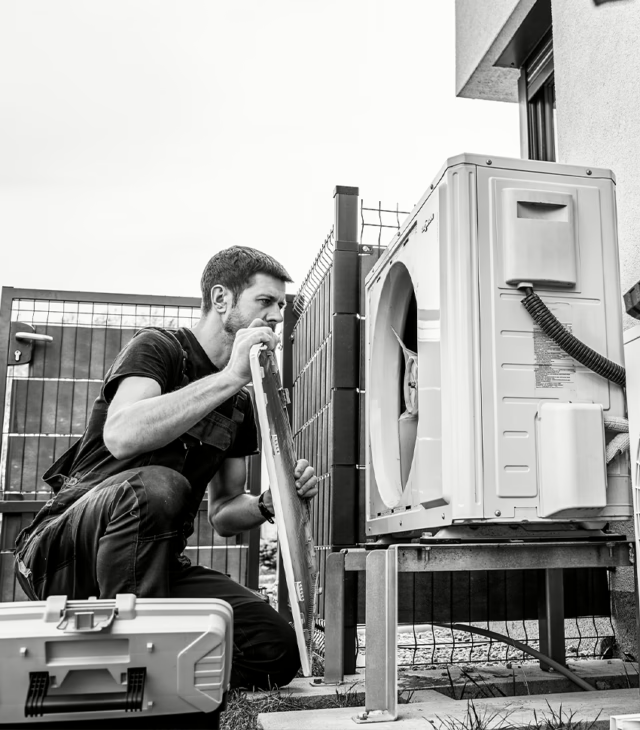
As fuel prices have sky-rocketed in the past few months, most people are looking for ways to ease the burden of growing costs. The good news is that 2026 is shaping up to be a promising year for clean energy incentives, especially here in Vermont, where Efficiency Vermont rebates can cover a large chunk of the cost for most projects.
Let’s explore four energy upgrades that can deliver the biggest savings and help lighten the burden of fuel costs today.
What upgrades are worth your attention in 2026?
If you’re trying to narrow down what energy upgrades are worth your time and money this year, the following are great starting points:
- Weatherization (air sealing and insulation)
- Heat pumps for space heating
- Heat pump water heaters
- Electric vehicles
Each one of these energy upgrades tackles a different contributor to your monthly fuel and energy bill, which can help lower costs over time. Most of these upgrades have opportunities for state rebates, federal tax credits, or utility incentives.
Weatherization: the upgrade most homes need first
Weatherization typically delivers the fastest returns of cost-effectiveness. A drafty house will leak heat no matter what source of heat you rely on, so sealing things up tight means you burn less energy and money.
Weatherization is typically focused on two main areas:
- Air sealing (sealing leaks around basements, attics, rim joists, doors, and electrical penetrations)
- Insulation (often the attic first, with basement and walls next, depending on the structure)
This year, Efficiency Vermont is offering up to 90% cash back on weatherization while limited-time funding lasts.
Heat pumps: a key driver for reducing heating costs
For homes heated with oil or propane, a heat pump is usually the biggest upgrade you can make to your space. Heat pumps move heat using electricity, and modern cold-climate models work well even in below zero temperatures. According to Energy Sage, “most cold-climate heat pumps are still efficient in temperatures as low as -15°F.”
Additionally, there’s a few things worth knowing before you sign a contract for a heat pump.
- Make sure you’re getting a cold-climate model. A standard heat pump may not be built for severe northeast winters.
- A mini-split (ductless) installation is usually faster and cheaper than a ducted system, although a ducted setup gives you more even heat throughout the house.
- Finally, research all the incentives you may qualify for. Work with a tax advisor to determine your eligibility for the federal heat pump tax credit that can knock another 30% off the project cost.
You can also check out the current Efficiency Vermont rebates for 2026:
- Up to $475 for ductless mini-split heat pumps
- Up to $2,200 for ducted heat pumps
- Other utility incentives may apply depending on where you live.
It’s important to note that if you’re considering a heat pump this year, committing to a weatherization upgrade first will result in a more efficient space that calls for a smaller, and therefore more cost-effective, heat pump. According to the U.S. Department of Energy, “existing homeowners looking to replace a gas heating system with a heat pump should weatherize their homes to ensure optimal cost savings and comfort, especially in older homes.”
Heat pump water heaters: the forgotten upgrade
Water heating is considered the second biggest energy expense in a home after space heating. ENERGY STAR shares that if your water heater is more than ten years old, considering an ENERGY STAR certified heat pump water heater can help save a family of four approximately $550 a year in energy costs. According to the U.S. Department of Energy, “most heat pump water heaters should meet hot water demand while using substantially less energy than standard electric water heaters.”
Check out these current Efficiency Vermont rebates for heat pump water heaters in 2026 that could give you up to $1,000 off, depending on what you qualify for:
- $600 off a qualifying heat pump water heater
- Up to an additional $400 or more for income-eligible households
- A few things to consider when thinking about a heat pump water heater upgrade:
- Heat pump water heaters require room to breathe. Most models require a space of around 450 to 700 cubic feet or bigger.
- These heaters can cool the surrounding air slightly while running, which is a nice perk in a warm basement.
- Federal tax credits may also apply on top of the state rebate.
Heat pump water heaters are one of those upgrades that will quietly save money every day of the year. While it certainly isn’t the flashiest upgrade, it works and can save you money.
Electric vehicles: fuel savings outside of the house
Fuel costs aren’t just a house heating problem. Everyone’s wallet has been hurting at the gas pump, and it may be your sign to take a serious look at EVs this year.
Last year, Energy Sage stated that “the average EV costs around 6 cents per mile to charge at home, compared to 13 cents per mile for a gas car.” Charging an EV at home costs about half of what gasoline costs per mile. Additionally, EV maintenance is cheaper because there’s no oil to change, no transmission to flush, and no exhaust system to rust out. According to the Green Energy Consumers Alliance “[the] average EV driver saves $4,600 in lifetime maintenance and repair.”
Things worth thinking about if you’re considering an EV:
- How far do you drive on a typical day? If you drive approximately 60 miles a day, almost any EV with home charging will be able to cover that distance.
- The IRS states that eligible buyers can write off up to $10,000 a year in interest on a qualifying new vehicle loan, including EVs assembled in the U.S. The deduction is available through 2028 and starts phasing out at higher incomes, so make sure to check with a tax advisor before you commit.
- Drive Electric Vermont offers additional incentives for income-qualified buyers. There are several utility rebates that can stack on top of state programs for thousands in combined savings.
With lower fuel costs, lower maintenance, and state incentives, the savings on EVs tend to build the longer you own the car.
How to secure energy upgrade rebates
The rebate process can be straightforward if you handle a few essential details at the beginning of the process:
- Confirm eligibility before you buy or sign a contract. Product requirements, utility territory, and building type all factor in.
- Use program-aligned contractors for these projects, as they will be able to know the ins and outs of the programs you choose.
- Check local rebate pages to confirm the latest amounts and rules, since some offers depend on limited-time funding.
- If you’re not sure where to start, calling an Energy Advisor can be one of the fastest ways to figure out what to prioritize.
Final thoughts
Your 2026 energy upgrade plan doesn’t have to be complicated. Pick an upgrade that improves your comfort and monthly bill, gather the rebates and credits you qualify for, and start from there. Remember, weatherization is usually the smart starting point, heat pumps tend to have the largest savings, and water heaters and EVs save you money over the long term.
About the Author

Shane Sutton
Shane is the Green Business Development Manager at EastRise Credit Union. He has a strong passion for sustainability and innovation, and enjoys helping promote eco-friendly financial solutions for green businesses and their customers. His work focuses on developing strategic partnerships and opportunities that help members transition to more sustainable practices.
Subscribe to the EastRise blog
Stay up to date on financial tips and tools that will build your financial skillset and help you reach your goals.
